
How to Talk to Your Kids When the Family Dog Is Seriously Ill
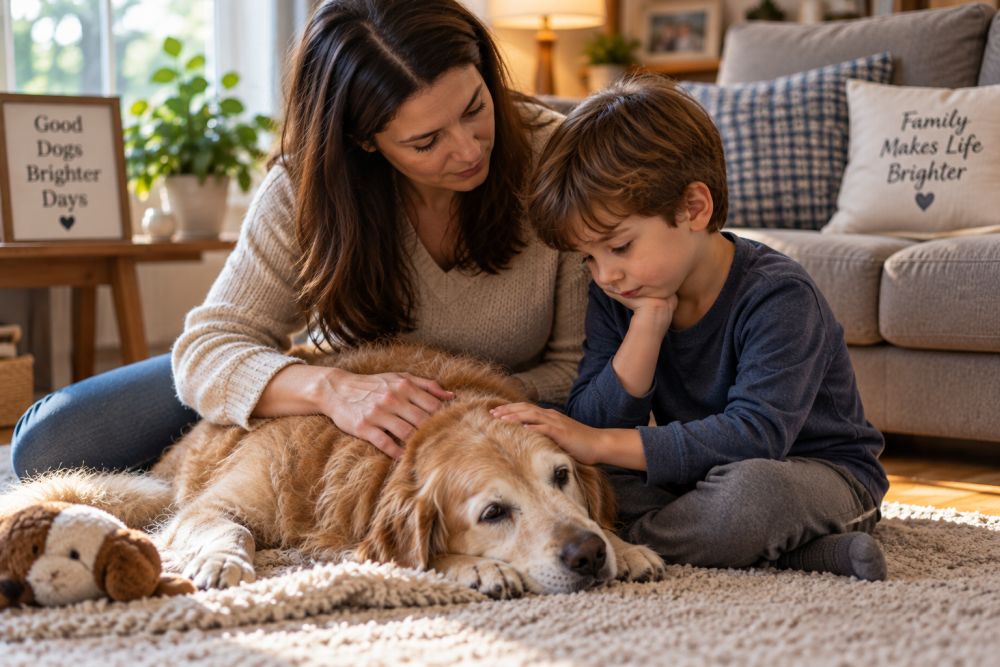
Few things are harder for a parent than watching a beloved family dog become seriously ill. Children often have a deep attachment to their pets, and they may notice changes in the dog's behaviour, routines, or energy before anyone explains what is happening.
Learning how to talk to kids about a sick dog can feel especially difficult when you are dealing with your own sadness and uncertainty. Parents do not need to have every answer. What matters most is giving children truthful information in a way they can understand, while making it clear that questions and emotions are welcome.
Choose Words That Match Your Child's Age
Explaining pet illness to children requires a different approach depending on their age and level of understanding. Younger children generally need short, concrete explanations. You might tell them that the dog is very sick, that the veterinarian is helping keep the dog comfortable, and that the illness may not get better.
Older children and teenagers can usually understand more detail. They may want to know what the illness is, what changes to expect, and what decisions the family might eventually face. Give them opportunities to ask questions without overwhelming them with medical information they have not requested.
Children may also return to the same question several times. This does not necessarily mean your explanation was unclear. Repetition can be part of how a child processes difficult information.
Be Honest Without Taking Away Hope or Security
Parents naturally want to protect children from painful realities, but vague language can sometimes make a frightening situation more confusing. Saying that a seriously ill dog is "just tired" or will "probably be fine" may conflict with what a child can see happening.
Honesty does not require predicting exactly what will happen. When the future is uncertain, it is appropriate to say so. You can explain that the veterinarian is monitoring the dog and that you will share important changes with the family.
If a child asks whether the dog is going to die, answer according to what you genuinely know. If death is a real possibility, avoiding the question entirely may increase anxiety. Clear language can be particularly important when preparing a child for pet loss. Young children may interpret expressions such as "going to sleep" literally, so straightforward terms such as "dying" and "death" can prevent misunderstandings.
Children also need reassurance about what will remain stable. Remind them that the adults in their lives are there to care for them and that they can talk about their feelings whenever they need to.
Let Children Help in Ways That Feel Comfortable
Being involved in a dog's care can give children a sense of connection during a time when much of the situation feels beyond their control. The right level of involvement will depend on the child's age, personality, and the dog's condition.
A younger child might refill a water bowl, bring over a favourite blanket, or sit quietly beside the dog. An older child may want to help with gentle grooming or accompany a parent during parts of the dog's daily routine. Participation should be offered rather than required.
Watch how your child responds. Some children want to spend as much time as possible with an ill pet, while others need occasional distance from the situation. Neither reaction means they care more or less.
It is equally important to respect the dog's needs. A seriously ill or elderly dog may need more quiet, sleep, and personal space than before. Helping children understand those boundaries can become part of caring for their pet compassionately.
Seek Veterinary Guidance as Your Dog's Needs Change
Parents are responsible for explaining what is happening, but they should not have to interpret every medical change themselves. If your dog stops eating, appears uncomfortable, has difficulty moving, or shows other significant changes, veterinary guidance can help your family understand what those changes may mean and what options are available.
Professional support can also give parents clearer information to share with their children. In Ontario, services such as Lakeside Mobile Veterinary Services are one example of veterinary care provided in a pet's familiar home environment. For some families, receiving guidance at home can reduce disruption for an ill dog while allowing parents to focus on the pet and their children's questions.
When speaking with the veterinarian, consider asking what changes the family may notice next. Knowing what to expect can make it easier to decide how much information to share with children and when another conversation may be necessary.
Make Room for Memories and Difficult Feelings
When a family dog is seriously ill, it is easy for every interaction to become focused on medication, appointments, symptoms, and worry. Making memories with a pet can help children remember that their relationship is about much more than the illness.
Meaningful moments do not have to be elaborate. Children might draw a picture of the dog, take photographs together, write down favourite memories, make a paw print keepsake, or simply spend a quiet afternoon nearby. If the dog is comfortable enough, the family might revisit a favourite resting place or enjoy a familiar routine together.
Parents should also make space for different emotional reactions. Kids and pet grief can include sadness, anger, fear, guilt, or even periods when a child seems completely unaffected. Children often move in and out of grief more quickly than adults, returning to play or everyday activities before becoming upset again.
Parents may be grieving at the same time. You do not have to hide every emotion from your children. Seeing a parent cry can show them that sadness is a normal response to loving someone or something deeply. At the same time, children should not feel responsible for comforting the adults around them.
There may never be a perfect conversation about a seriously ill family dog. Instead, think of it as an ongoing series of age-appropriate conversations. Tell children what you know, acknowledge what you do not know, answer questions as they arise, and continue making space for ordinary family life.
A dog's illness can be one of a child's first experiences with serious illness, uncertainty, and loss. With clear language, patience, and compassion, parents can help children face that experience while preserving the love and memories that made their family pet so important.