Interesting Facts About The Wizard of Oz You Probably Never Knew
You probably think you know The Wizard of Oz, but most people only recognize the surface—the songs, the characters, and the iconic imagery. Beneath that familiarity is a story shaped by personal loss, creative accidents, risky production decisions, and decades of reinvention.
What makes Oz fascinating isn’t just what appears on screen—it’s everything behind it. From the origins of Dorothy’s name to the strange early adaptations and the film’s lasting influence on pop culture, the story extends far beyond the yellow brick road.
The Heartbreaking True Story Behind Dorothy's Name
When L. Frank Baum named his protagonist Dorothy, it wasn’t a random choice—it came from a deeply personal place. The name honors his niece, Dorothy Louise Gage, who died as an infant in 1898. Her death had a profound emotional impact on Baum’s family, especially his wife Maud, who struggled heavily with the loss.
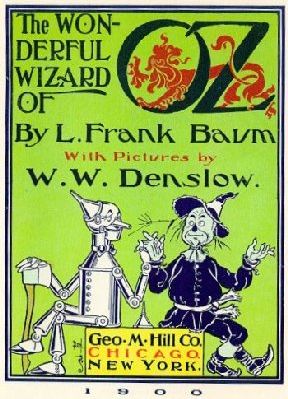
Rather than letting that grief fade, Baum carried it into his work. When he wrote The Wonderful Wizard of Oz in 1900, he chose the name “Dorothy” as a quiet tribute. It wasn’t meant to be obvious or symbolic in a literary sense—it was personal. That emotional foundation gives the character a different kind of weight. Dorothy isn’t just a fictional girl swept into a magical world—she’s connected to a real life that was cut short.
That connection also explains part of the character’s tone. Dorothy is grounded, practical, and emotionally steady in a way that contrasts with the chaos around her. That balance makes her relatable, and it may be part of why audiences have continued to connect with her for generations. What started as a private act of remembrance became one of the most recognizable characters in pop culture.
The Filing Cabinet That Accidentally Created Oz
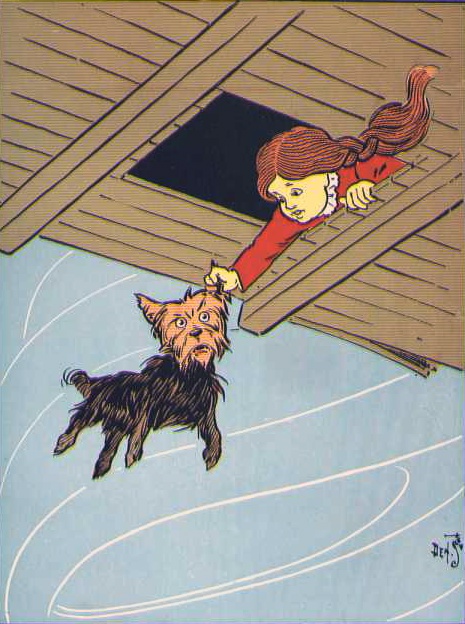
The name “Oz” has one of the simplest—and strangest—origin stories in literature. According to Baum himself, he came up with it by glancing at a filing cabinet. The drawers were labeled alphabetically, and one of them read “O–Z.” That was enough to spark the name instantly.
What’s interesting isn’t just the randomness—it’s how well the name works. “Oz” is short, easy to remember, and feels distinct without needing explanation. It doesn’t tie itself to any existing geography or culture, which allows it to feel completely separate from the real world. That separation is important because it reinforces the idea that Dorothy has entered a place with its own rules and logic.
Over time, the name has taken on meaning far beyond its origin. It now represents an entire world, a tone, and a style of storytelling. Most people recognize “Oz” immediately, even if they don’t know where it came from. That’s what makes this small detail so powerful—something created in a moment of convenience became one of the most recognizable fictional settings ever.
Step deeper into the world of Oz with more fascinating facts and trivia!
The Future Tech Baum Predicted in His Oz Novels
Long before augmented reality headsets or self-driving cars entered the public imagination, L. Frank Baum was already mapping tomorrow's tech. His Electrified Visions and Autonomous Vehicles appear across both Oz and non-Oz works with striking accuracy.
Consider these four predictions:
- Character Marker – Spectacles reveal personality traits via letters on foreheads, mirroring modern AR overlays.
- Self-Driving Scalawagons – Colorful autonomous taxis freely transport Oz citizens without human drivers.
- Farm Tractors – Spiked-wheel vehicle variants handle agricultural labor automatically.
- Glider Conversion – Extendable running boards transform cars into aerial vehicles.
You're looking at a 1901 author who envisioned gamified social metrics and driverless fleets decades before Silicon Valley made them buzzwords. Baum's Character Marker spectacles work by concentrating electrical vibrations of character through their lenses, framing human traits as natural forces rather than purely moral choices.
The Stage Musical That Replaced Toto With a Cow
Before the 1939 film defined what The Wizard of Oz looked like, earlier adaptations experimented freely with the story. One of the most unusual changes appeared in the 1902 stage musical, where Toto was replaced with a cow named Imogene.
The decision wasn’t random—it was practical. Stage productions needed visually engaging elements that could capture audience attention, and a costumed cow provided a larger, more noticeable presence than a small dog. Baum approved the change, showing that even he was open to reinterpreting his own work.
This version of the story also introduced other differences, including alternate plot elements and character changes. The tone leaned more toward spectacle than narrative consistency, reflecting how early adaptations prioritized entertainment over accuracy.
While Imogene didn’t carry over into later versions, her existence highlights something important: Oz has never been fixed. From the beginning, it has been flexible, reshaped to fit different mediums and audiences. That willingness to change is part of what allowed the story to survive and evolve over time.
Every Major Difference Between the Book and the 1939 Film
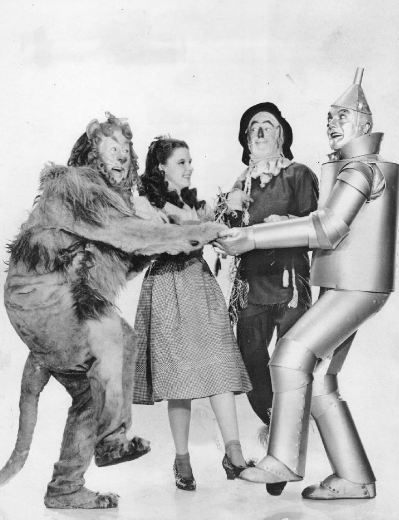
While the 1939 film cemented Oz as a cultural touchstone, it diverged from L. Frank Baum's book in significant ways. You'll notice these key differences:
- Silver slippers became ruby red to showcase Technicolor's vibrancy, losing their original Populist symbolism.
- Glasses illusion disappears in the film — Baum's Emerald City only appeared green because locked-on glasses forced that perception.
- Kansas farmhands Hunk, Hickory, and Zeke don't exist in the book, nor does Miss Gulch — the film invented them to frame Oz as a dream.
- The book's poppy field rescue uses thousands of mice, not Glinda's asbestos snow.
Most strikingly, Baum presented Oz as reality, while the film leaves Dorothy's adventure permanently ambiguous. In the book, the Wicked Witch possessed a single all-seeing eye she used to scan the land for Dorothy and her companions, a cyclops detail the film replaced entirely with a crystal ball.
The Dangerous Secrets Behind the 1939 Film Production
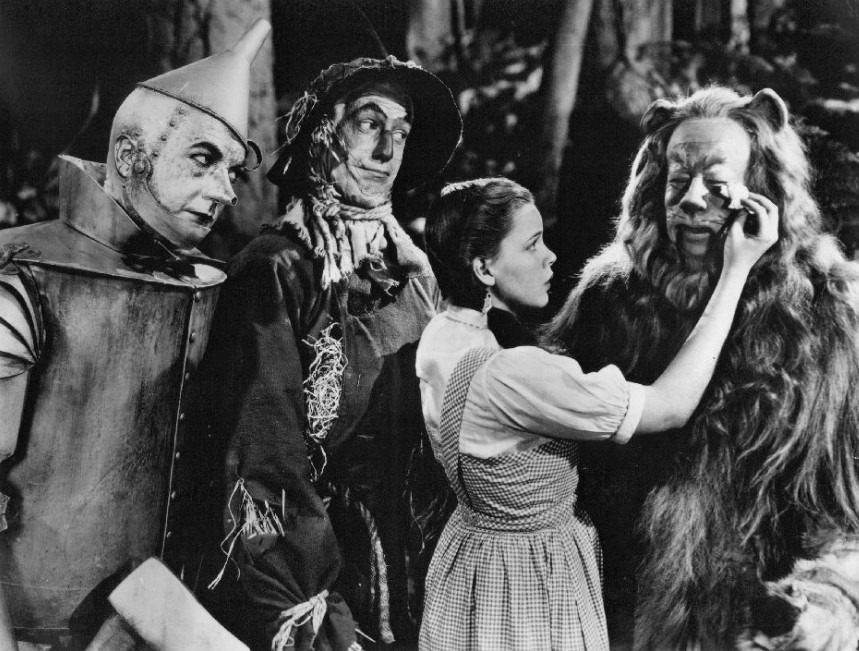
Behind the film’s colorful and optimistic tone is a production filled with real risks. The techniques used to create its visual effects often came at the expense of the actors’ safety. The original Tin Man actor, Buddy Ebsen, had to leave the production after inhaling aluminum powder from his makeup, which caused severe lung issues.
Margaret Hamilton, who played the Wicked Witch, suffered burns during a special effects accident. Even the snow used in the poppy field scene was made from asbestos, a material now known to be highly dangerous. These details reveal the cost of early filmmaking techniques. At the time, safety standards were limited, and the focus was on achieving the desired visual effect, regardless of long-term consequences.
Understanding these risks adds another layer to how the film is viewed today. What appears seamless on screen requires experimentation and, in many cases, real physical danger. It highlights how much filmmaking has evolved, both technically and ethically.
The Oz Songs and Scenes MGM Almost Cut
The song that defined a generation almost got cut. MGM executives nearly removed "Over the Rainbow" after a June 1939 preview, calling it too slow. Arthur Freed fought back, and Mayer relented.
You'd be surprised how many deleted numbers and reprise cuts shaped the final film. Here's what didn't make it:
- Jitterbug Sequence – Filmed but cut to trim 30 minutes of runtime
- Scarecrow Dance – Ray Bolger's extended routine removed during post-production
- Alternate sequences – A completely different Munchkinland song replaced the original composition
- Witch march – "Death to the Wizard of Oz" featured Bulbo and a conquest subplot, dropped entirely in rewrites
These cuts transformed a bloated production into a timeless classic. The song ultimately won the Academy Award for Best Original Song, cementing its place in cinematic history.
How Wicked, Remakes, and Pop Culture Keep Reinventing Oz
The film deconstructs four iconic elements:
- Yellow Brick Road — reframed as the Wizard's propaganda tool, built through forced animal labor
- Glinda's bubble travel — revealed as the Wizard's deception, masking her actual lack of magical flight
- Water-melting rumors — weaponized misinformation turning citizens against Elphaba
- Silver heels — a nod to Baum's original novel, contrasting the 1939 film's red shoes
Director Jon M. Chu's vision transforms Gregory Maguire's novel into pointed commentary on authoritarianism, cult of personality, and systemic oppression — proving Oz still reflects contemporary cultural anxieties. The anthem "No Place Like Home," written by Stephen Schwartz and performed by Cynthia Erivo, is deliberately undercut at its end by someone blaming Elphaba, honoring the darkness of the story's conclusion.
Why The Wizard of Oz Became a Pop Culture Foundation
Over time, The Wizard of Oz has moved beyond being just a film or a book—it has become part of the structure of pop culture itself. Its imagery, themes, and characters are so widely recognized that they function as shared references across different forms of media.
Elements like the yellow brick road, the Emerald City, and the phrase “there’s no place like home” carry meaning even when separated from their original context. They are used in advertising, music, television, and everyday conversation as shorthand for larger ideas—journey, aspiration, or the search for belonging. These references work instantly because audiences already understand them.
This level of integration is rare. It means the story doesn’t need to be retold directly to remain relevant. Instead, it continues to exist through reinterpretation and reference, reinforcing its presence across generations without relying on constant retelling.
How Oz Became a Template for Fantasy Storytelling
The structure of The Wizard of Oz has influenced how fantasy stories are told. The idea of leaving a familiar environment, entering an unfamiliar world, and returning with new understanding has become a widely used narrative framework.
This structure works because it mirrors real experience. It reflects growth through change—stepping into uncertainty, facing challenges, and gaining perspective before returning to something familiar. That emotional arc makes the story easy to connect with, even when the setting is completely fictional.
Oz helped establish this model in a way that was clear and accessible. Its influence can be seen across genres, from children’s stories to large-scale fantasy franchises. Even when audiences don’t consciously recognize it, the structure feels familiar, which is exactly why it continues to be used.
Conclusion
The Wizard of Oz isn’t just a story—it’s a collection of ideas, decisions, and moments that have shaped how people experience storytelling. From its origins in personal tragedy to its evolution across different media, it has grown far beyond its original form.
What makes it lasting isn’t just its history, but its ability to change. It continues to be reinterpreted, referenced, and reimagined, proving that some stories don’t just survive over time—they keep influencing what comes next.